FM-07Welding Bay
Welding Bay Flooring
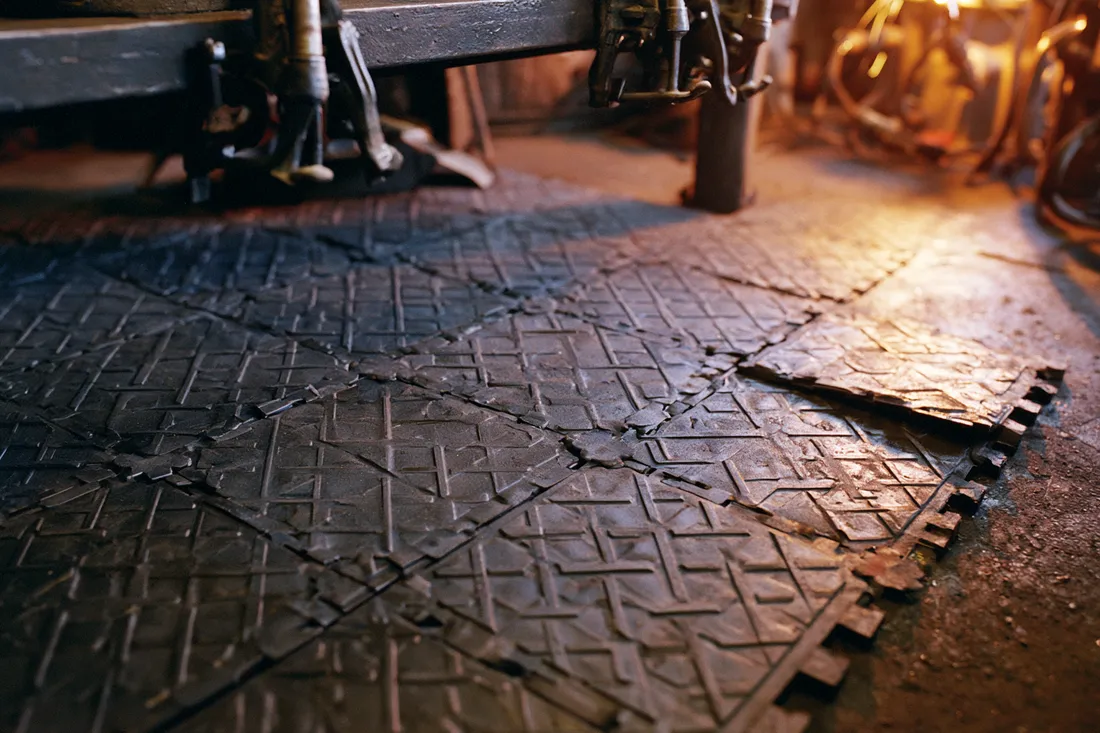
Welding bay flooring covers a defined work area with fire-resistant matting — often interlocking tiles that can be replaced individually as they wear or burn. It protects the floor across the bay from sparks, spatter and slag, and the right grade adds grip and standing comfort.
Specifying a bay floor means balancing fire resistance, surface grip, fatigue, cleanability and how the matting copes with oil and chemicals. Below is a practical checklist.
In short
Welding bay flooring is fire-resistant matting, often interlocking tiles you can replace individually as they wear or burn, laid across a welding or fabrication bay to protect the whole working area from sparks, spatter and slag.
Replaceable tiles
Tile formats let you swap worn or burned sections individually.
Fire-resistant build
Flame-retardant grades for spark, spatter and slag exposure.
Grip & comfort
Anti-slip surfaces and anti-fatigue options for standing work.
Cleanable & robust
Surfaces that cope with grinding dust, oil and daily cleaning.
What is welding bay flooring?
Welding bay flooring is matting laid across a welding or fabrication bay to protect the whole working area, rather than a single mat under one task. Tiles are common because individual squares can be replaced as they wear, keeping the rest of the floor in service.
Welding bay specification checklist
- Fire classification — request the product’s reaction-to-fire certificate.
- Surface grip — slip resistance for dust, oil and coolant underfoot.
- Anti-fatigue — cushioning for long welding and fabrication shifts.
- Replaceable tiles — swap burned or worn sections individually.
- Cleanability — surfaces that sweep and wash down easily.
- Oil & chemical exposure — a grade suited to the contaminants present.
- Ramped edges and trip control: beveled edges and stable joints.
Tiles vs mats vs rolls
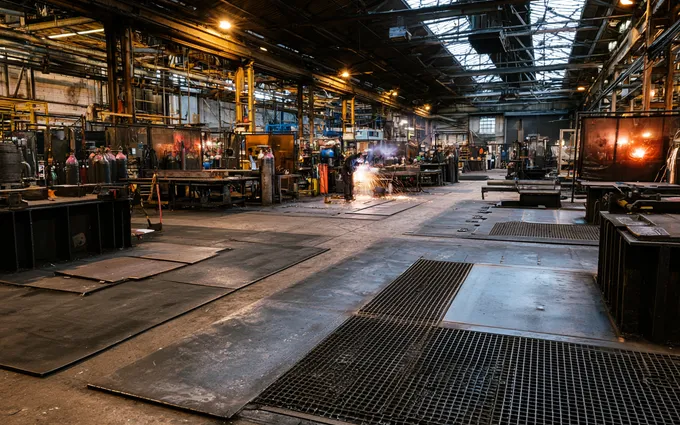
Tiles suit defined bays and easy replacement; single mats suit one workstation; rolls suit long runs and walkways. The best format depends on the bay layout and how the area is used — tell us the dimensions and we’ll advise.
How to specify a bay floor
Start with the fire and spark exposure, then layer in grip, fatigue and cleaning needs, and confirm the format. Always request the product’s fire classification and confirm it suits the bay rather than assuming a rating.
Welding Bay Flooring — questions
Honest answers specific to this matting type.
01How do I specify matting for a welding bay?
Work through fire classification, surface grip, anti-fatigue, replaceable tiles, cleanability, oil/chemical exposure and ramped edges. Start with the spark and fire exposure, then add grip and comfort, and confirm the format and certificate. Send us the bay dimensions and process and we’ll help specify.
02Are replaceable tiles better than a single mat?
For a defined bay, tiles let you replace burned or worn squares individually instead of the whole floor, which can be more economical over time. A single mat suits one workstation. The best choice depends on the bay size and wear pattern.
03What fire rating should welding bay flooring have?
Look for fire-resistant or flame-retardant grades and request the product’s reaction-to-fire classification (for example under EN 13501-1). The right level depends on the bay; confirm the certificate suits your setting rather than relying on the label.
04Can welding bay flooring handle oil and coolant?
Some grades resist oil and chemicals better than others, so match the material to what’s on the floor. Tell us about any oil, coolant or chemical exposure and we’ll recommend a suitable, cleanable grade.
Go deeper before you specify
How to Specify Matting for a Welding Bay
A practical specification guide for welding bay flooring — fire classification, grip, anti-fatigue, format, cleanability, chemical resistance and trip control, with a checklist to send a supplier.
Read guideWelding Floor Protection: Tiles vs Mats vs Rolls
When to use interlocking tiles, single mats or rolls for welding and hot works floor protection — how each format wears, replaces and suits a bay, station or walkway.
Read guideHow Far Do Welding and Grinding Sparks Travel — And How Big a Floor Zone Should You Protect?
How far welding spatter and grinding sparks reach, the US 35 ft vs UK ~10 m clearance-zone rules, and how to translate that zone into mat sizing and combustible-floor protection.
Read guideWelding Bay Flooring Layout Guide
How to plan the physical layout of welding bay flooring — station positions, access routes, gas bottle storage and phased installation across a multi-station bay.
Read guideCompare nearby options
 FM-01Hot Works
Hot Works Matting
The hub for welding, grinding and cutting floor protection — fire-resistant matting that handles sparks, spatter and slag.
View matting FM-02Welding Mats
Welding Mats
Spark-, spatter- and heat-resistant welding floor mats to protect floors and surfaces during welding, grinding and cutting.
View matting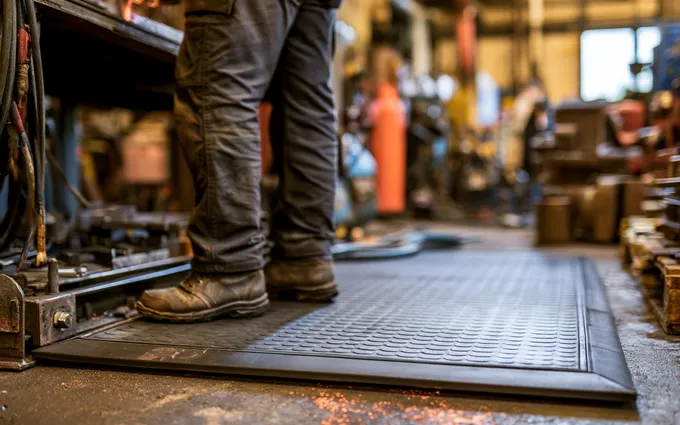 FM-03Anti-Fatigue
Flame-Retardant Anti-Fatigue Mats
Cushioned, spark-resistant matting to ease long welding and fabrication shifts without the fire risk of standard foam.
View matting FM-04Fire-Resistant
Fire Resistant Matting
Flame-retardant, self-extinguishing floor matting for welding bays, fabrication shops, foundries and other hot work areas.
View mattingQuotes & specification help
Planning a welding bay floor?
Send the bay dimensions, number of stations, floor type, traffic and any fire classification required — we'll help you specify and lay out the whole bay.