FM-11Rubber
Rubber Matting & Welding Sparks
Rubber matting is hard-wearing and grippy, and it suits plenty of general workshop areas. But standard rubber is not made for direct welding sparks or molten metal — they can burn, melt and damage it.
This page is an honest guide to where rubber matting works in a workshop and where you should switch to a fire-resistant or welding-specific product instead.
Hard-wearing
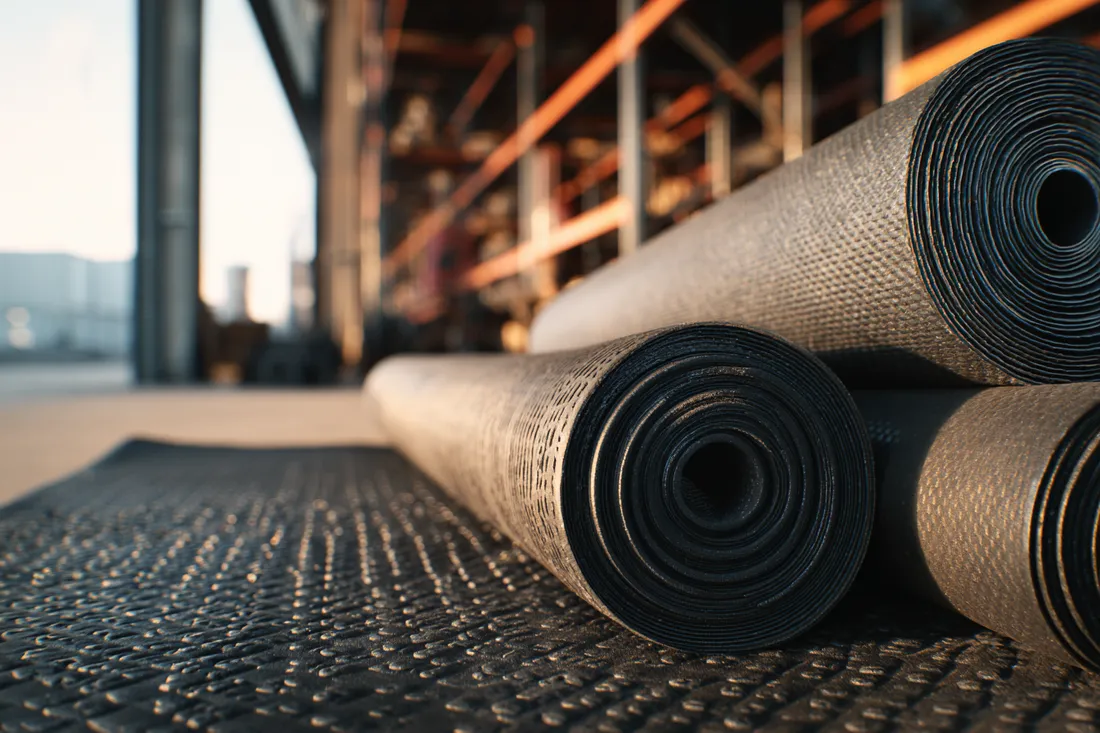
Durable, grippy matting for general workshop floors.
Honest limits
Clear on where welding sparks make standard rubber unsuitable.
Range of finishes
Fine-rib, checker plate and studded for grip and drainage.
Right grade advice
Guidance on rubber vs fire-resistant options for hot work.
Where rubber matting works in a workshop
Rubber matting suits general workshop areas away from direct hot work — walkways, assembly benches, storage and standing areas — where it gives durability and grip. It comes in finishes such as fine-rib, checker plate and studded, in rolls, tiles and mats.
Where welding sparks rule it out
Standard rubber is not made for direct welding sparks, spatter or molten metal. Sparks can burn and pit it, and heat can melt or harden it. For welding bays, grinding stations and other hot work, use a fire-resistant, flame-retardant or welding-specific mat instead.
Rubber vs fire-resistant matting
Rubber wins on general durability and cost for non-hot-work areas. Fire-resistant matting wins wherever sparks and heat are present. Many workshops use both — rubber for general floors, fire-resistant grades in the hot work zones. Tell us the layout and we’ll split it sensibly.
Rubber Matting & Welding Sparks — questions
Honest answers specific to this matting type.
01Can rubber matting be used near welding sparks?
Standard rubber matting is not suitable for direct welding sparks, spatter or molten metal — they can burn, pit, melt or harden it. Use it for general workshop areas away from hot work, and switch to a fire-resistant or welding-specific mat in welding and grinding zones.
02Is rubber matting oil resistant?
Some rubber compounds resist oil and chemicals better than others, so match the grade to the contaminant. Standard rubber can degrade with prolonged oil exposure. Specify what’s on the floor when you enquire.
03Should I use rubber or fire-resistant matting?
Use rubber for general, non-hot-work workshop areas where durability and grip matter, and fire-resistant matting wherever sparks and heat are present. Many sites use both. Send us the layout and we’ll recommend by zone.
Go deeper before you specify
Can Rubber Matting Be Used Near Welding Sparks?
Why standard rubber and PVC matting fail near welding sparks and spatter, where rubber still works in a workshop, and what to specify in the hot work zone instead.
Read guideWhat Are Welding Mats Made Of? Materials Explained
The materials behind welding and hot-work mats: silicone-coated fiberglass, vermiculite glass, high-silica, carbon felt, leather, ceramic fiber and rubber, with honest heat limits and where each belongs.
Read guideCompare nearby options
 FM-01Fire-Resistant
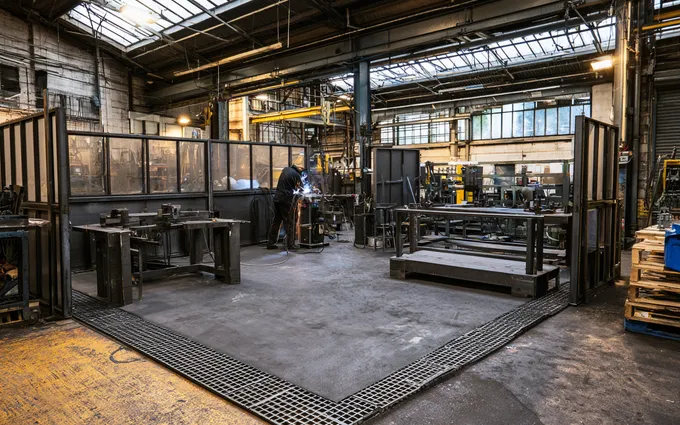
Fire Resistant Matting
Flame-retardant, self-extinguishing floor matting for welding bays, fabrication shops, foundries and other hot work areas.
View matting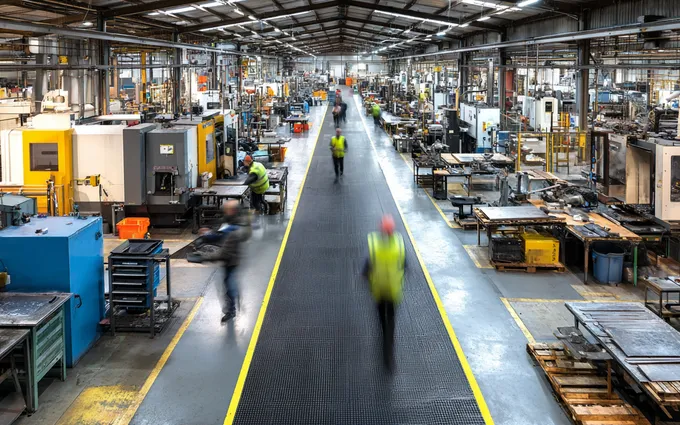 FM-02Workshop
Workshop Matting for Hot Work Zones
How to map matting across a workshop — fire-resistant in hot work zones, anti-fatigue at benches, anti-slip on dusty floors.
View matting FM-03Anti-Slip
Anti-Slip Mats for Welding & Fabrication Areas
Grip underfoot for fabrication and welding floors that collect grinding dust, oil, coolant and water.
View mattingQuotes & specification help
Tell us about your hot work area.
Welding bay, grinding station, fabrication cell or temporary site hot work — send the process, area size and any oil, coolant or fire-classification requirement. We’ll help specify spark-resistant floor protection.