FM-09Temporary
Temporary Hot Work Floor Protection
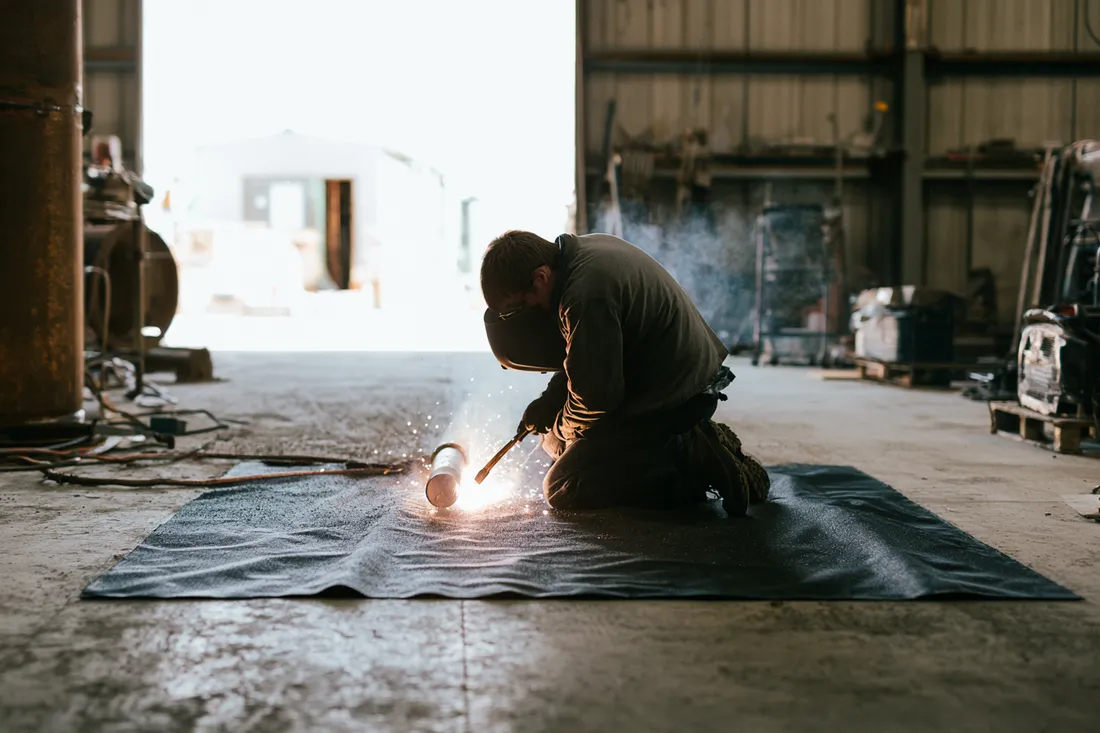
Hot work on site — maintenance welding, repairs, cutting — often happens over floors that aren’t built for it. Temporary hot work floor protection is portable, fire-resistant matting laid down to protect those floors from sparks, spatter and slag for the duration of the job.
It supports the floor-protection element of a hot work permit, then lifts and moves to the next job. It does not replace the permit, fire watch or risk assessment.
In short
Temporary hot work floor protection is portable, fire-resistant matting laid down to protect floors from sparks, spatter and slag for the duration of a job; it supports the floor-protection element of a hot work permit, not the permit itself.
Portable protection
Lay down for the job, then lift and move to the next.
Fire-resistant
Flame-retardant grades for spark, spatter and slag exposure.
Supports permits
Helps meet the floor-protection element of a hot work permit.
Protects existing floors
Shields concrete, coated and finished floors not built for hot work.
What is temporary hot work floor protection?
It’s fire-resistant matting used to protect a floor while temporary hot work takes place — for example maintenance welding, on-site repairs or cutting — then removed once the job is done. It’s common where the permanent floor isn’t suited to sparks and heat.
Hot work permits and floor protection
A hot work permit is a safety control system for work that produces heat, sparks or flame. Floor protection is one part of the precautions a permit may require, alongside fire watch, clearing combustibles and extinguishing means. Matting helps meet the floor-protection element — it does not replace the permit or the wider controls.
Choosing portable protection
- Match the material to the sparks, spatter and heat of the task.
- Size it to where sparks and slag land, including bounce.
- Choose a format that’s practical to lay, lift and move on site.
- Request the product fire classification and confirm suitability.
Inspection and reuse
Because portable protection is reused across jobs, inspect it each time for burn-through, charring and holes, and replace once protection is reduced. A damaged sheet no longer protects the floor beneath.
Temporary Hot Work Floor Protection — questions
Honest answers specific to this matting type.
01What floor protection do I need for a hot work permit?
A permit may require protecting the floor from sparks, spatter and heat. Fire-resistant matting laid over the work area helps meet that element, alongside clearing combustibles, a fire watch and extinguishing means. The matting supports the permit; it doesn’t replace it.
02Can I reuse temporary floor protection?
Yes — portable protection is designed to lay down, lift and move between jobs. Inspect it each time for burn-through, charring and holes, and replace once protection is reduced. Don’t reuse a damaged sheet.
03Does floor protection satisfy the whole permit?
No. Floor protection is one part of hot work precautions. A permit also covers fire watch, removing or shielding combustibles, ventilation and extinguishing means. Use matting alongside your full set of controls.
04Is temporary hot work matting fireproof?
No matting is truly fireproof. It’s fire-resistant for its intended use. Match it to the task’s heat and sparks and follow your permit’s wider precautions.
Go deeper before you specify
How to Protect Floors During Temporary Hot Works
How contractors and maintenance teams can protect an existing floor during a one-off welding, cutting or grinding job, using portable, quick-lay matting.
Read guideHot Work Permits and Floor Protection
What a hot work permit is, where floor protection fits in, and why matting supports but never replaces the permit, fire watch and risk assessment.
Read guideDo Welding Sparks and Slag Damage Concrete Floors?
How welding sparks, spatter and slag affect concrete, epoxy, vinyl and timber floors — and how flame-resisting matting protects the substrate and supports a hot work permit.
Read guideWorkplace Safety Matting and Hot Works Risk Assessments
How floor protection fits into a hot works risk assessment, what to record about matting, and when to review it — for health and safety managers.
Read guideRunning Hot Work Safely in a Warehouse Maintenance Bay
How to manage floor protection in a warehouse maintenance bay over time — setup, day-to-day checks, review triggers, and contractor vs in-house considerations.
Read guideCompare nearby options
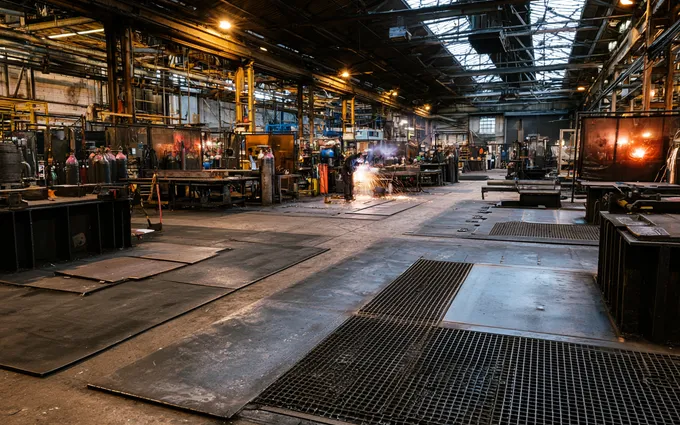 FM-01Hot Works
Hot Works Matting
The hub for welding, grinding and cutting floor protection — fire-resistant matting that handles sparks, spatter and slag.
View matting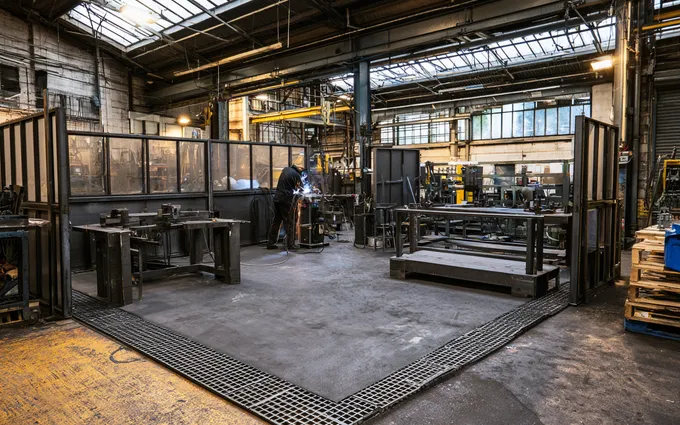 FM-02Fire-Resistant
Fire Resistant Matting
Flame-retardant, self-extinguishing floor matting for welding bays, fabrication shops, foundries and other hot work areas.
View matting FM-03Welding Mats
Welding Mats
Spark-, spatter- and heat-resistant welding floor mats to protect floors and surfaces during welding, grinding and cutting.
View matting FM-04Spark-Resistant
Spark Resistant Matting
Floor protection built to take sparks, spatter and hot fragments from welding, grinding and cutting.
View matting FM-05Warehouse
Warehouse & Storage Matting
Entrance, standing and walkway matting for warehouse and storage areas — a supporting range alongside our hot works focus.
View mattingQuotes & specification help
Specifying protection for a site visit or permit job?
Send the process, typical job size, and how often you'll redeploy the matting — we'll help you choose a portable format that meets your permit's floor-protection requirement.